Patola Motifs/ Bhat

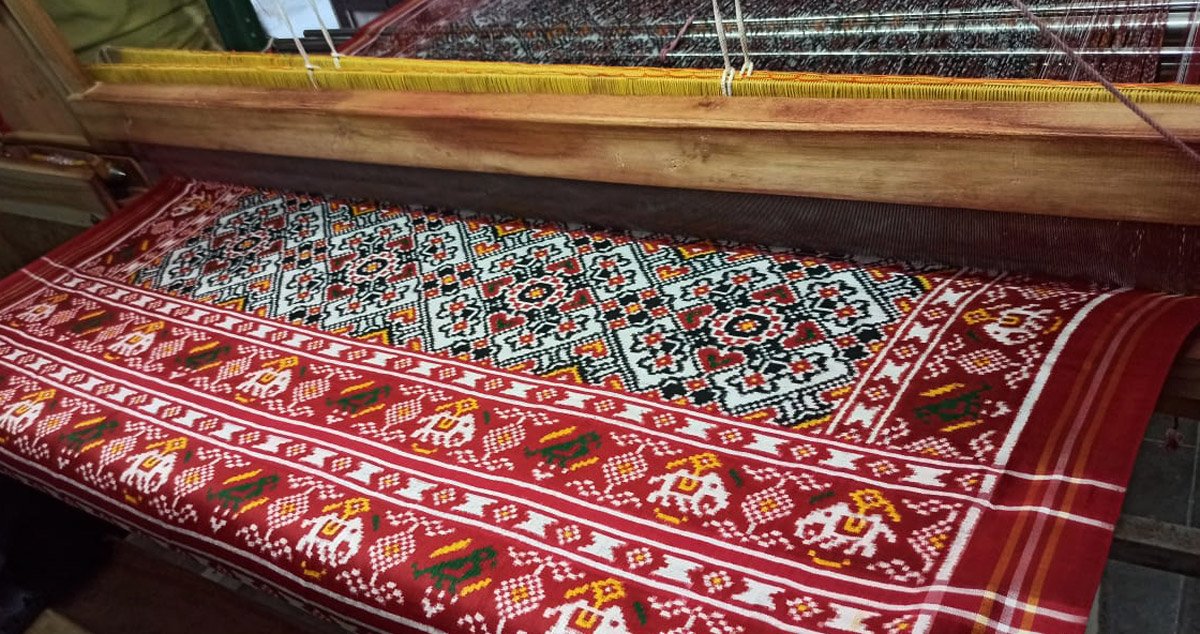
The word Patola came from Sanskrit word “Patt-kalam”, where “Patt” is used to describe silk cloth. Patola have been made by Salvi caste since last 800 years. It is also famously described in “Kuvarbai’s Mameru” a famous novel written by Premanand in 17th century.(1)
Usually patola made from silk by using “Double Ikat” technique. In this technique pattern is prepared on warp and weft separately, further they are dyed with colour using tie-dye method and finally woven in to beautiful fabric. Patola loom is made of rosewood and bamboo sticks but like handloom it does not have any fix frame work, as for every new patola saree, the whole frame work is to be set again. The whole process is done manually involving about three to four person per patola. One patola gets completed within 5 to 6 month depending upon width of saree and complication of design. (1)
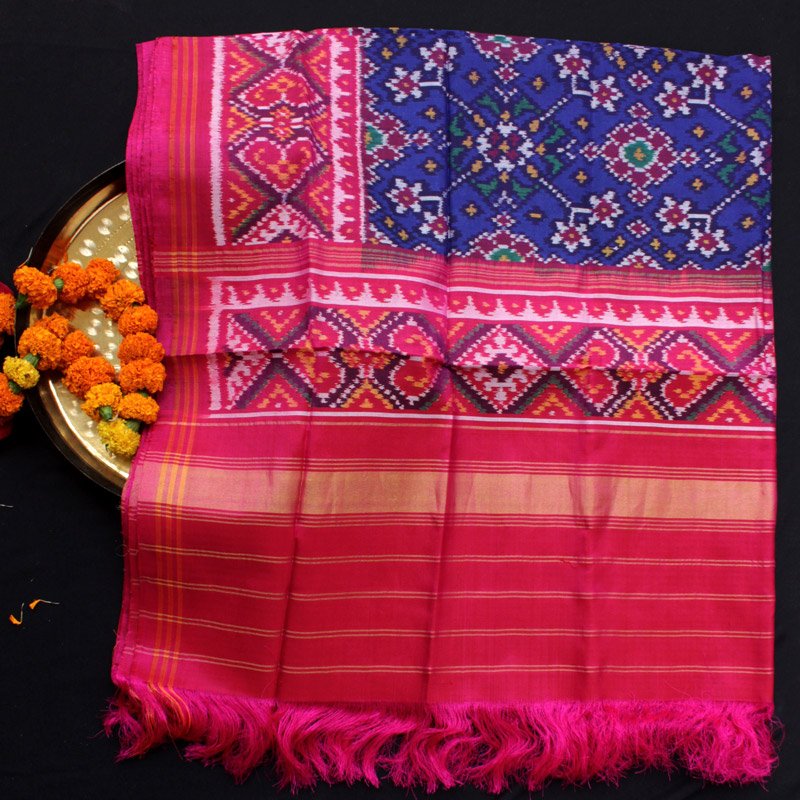
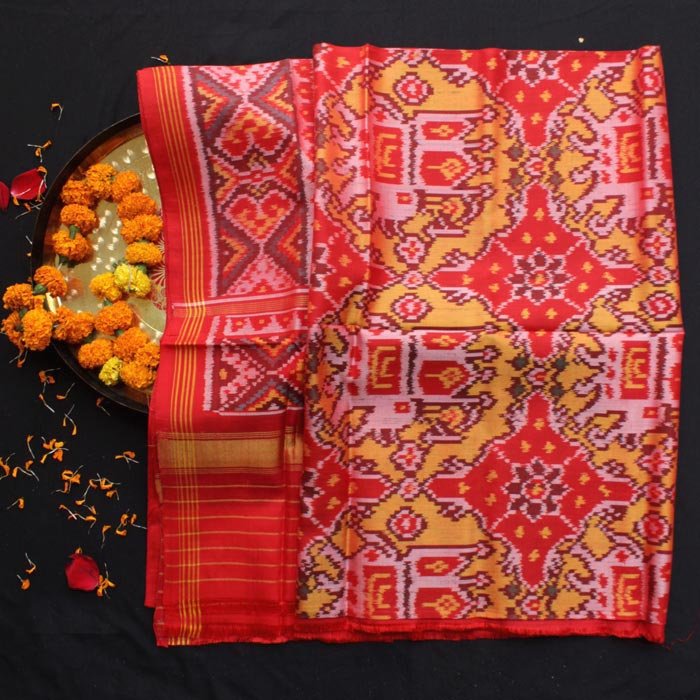
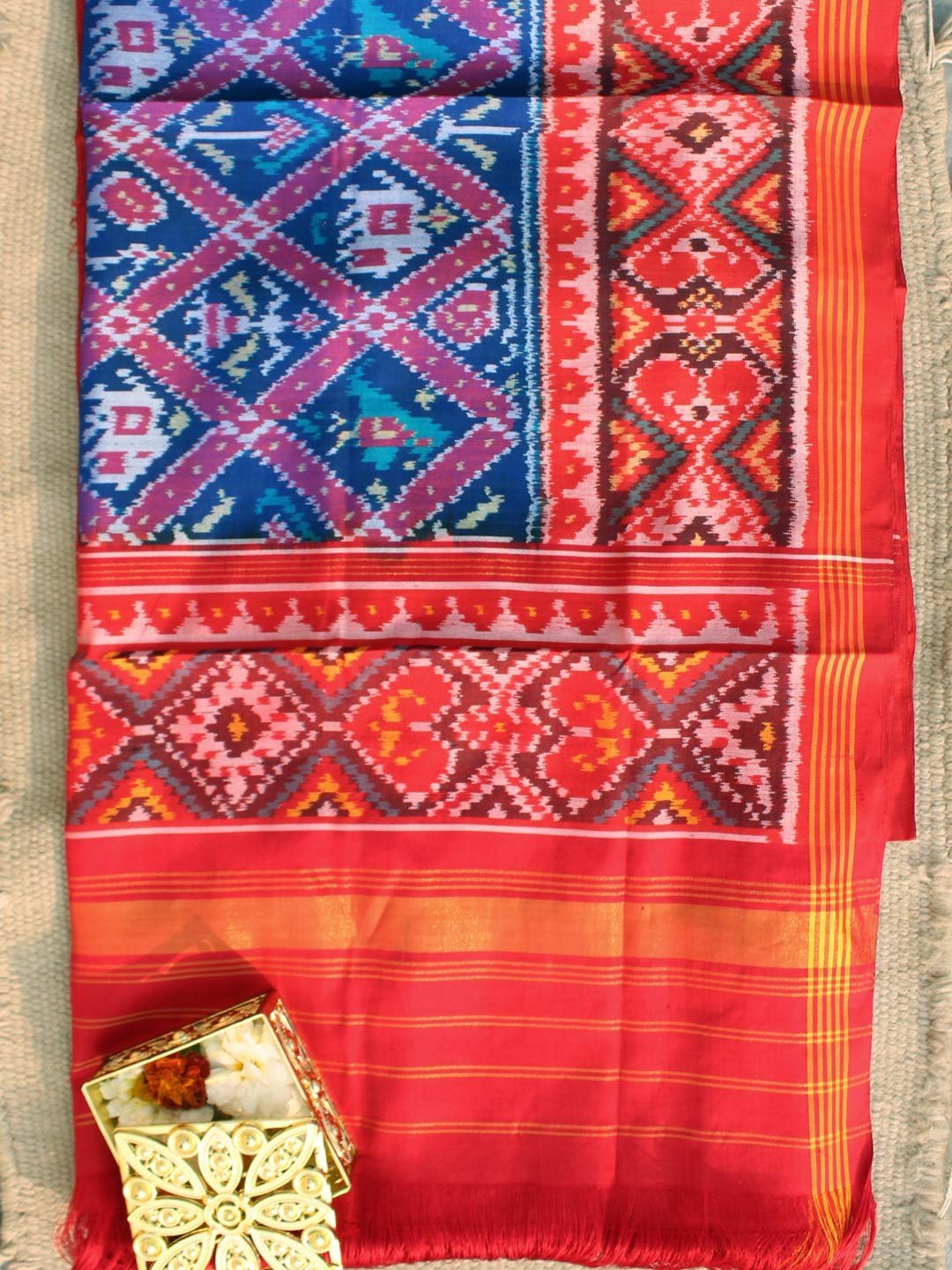
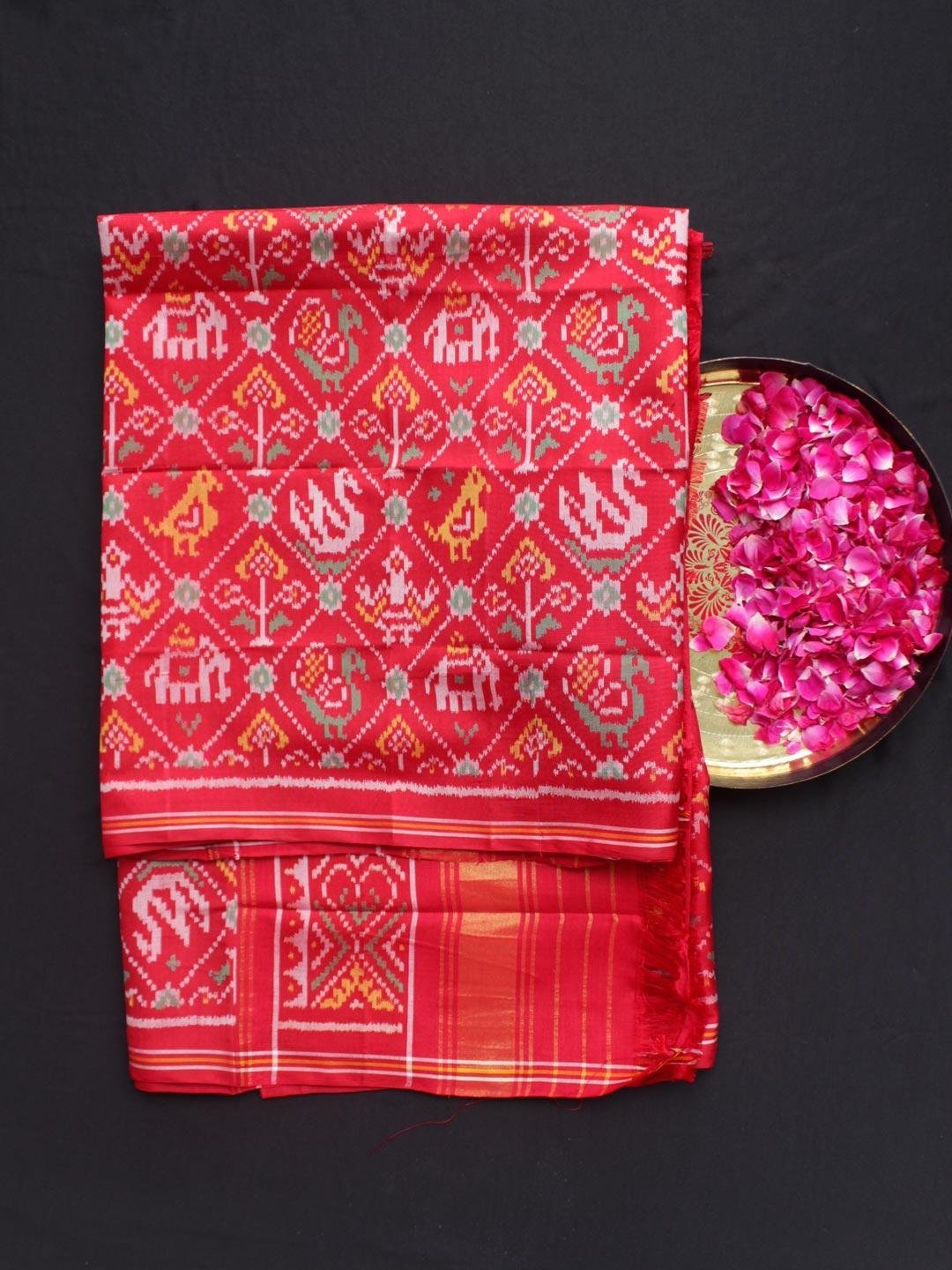
The designs on a patola saree are numerous are divergent motifs, but the traditional Patola has been still the
most valued. Intricate weaves of Patola with traditional colours and motifs create beautiful fabric. The motifs most commonly found include the following:
1. Pan Bhat: Pan means leaf and Bhat pattern., Heart shaped pipal leaf (Ficus religious)
2. Ful / Fulvaili Bhat: Flower and Flower garden
3. Chokdi Bhat: or choktha bhat) is a traditional geometric diamond-lattice or square grid motif
4. Chhabadi Bhat patola: The chhabadi design of an eight-petalled Lotus, with birds and flowers radiating from it .
5. Nari Kunjar Bhat: Nari means dancing girl, doll and Kunjar means elephant
6. Mor Patangya Bhat: Mor means peacock and patangya butterfly
7. The Matsya or Fish
8. Navratna Bhat : The word ‘Navratna’ or 9 gem pendant our solar system, known as ‘Navgraha’.
9. Laheria Bhat: Laheria means diagonal striped pattern